
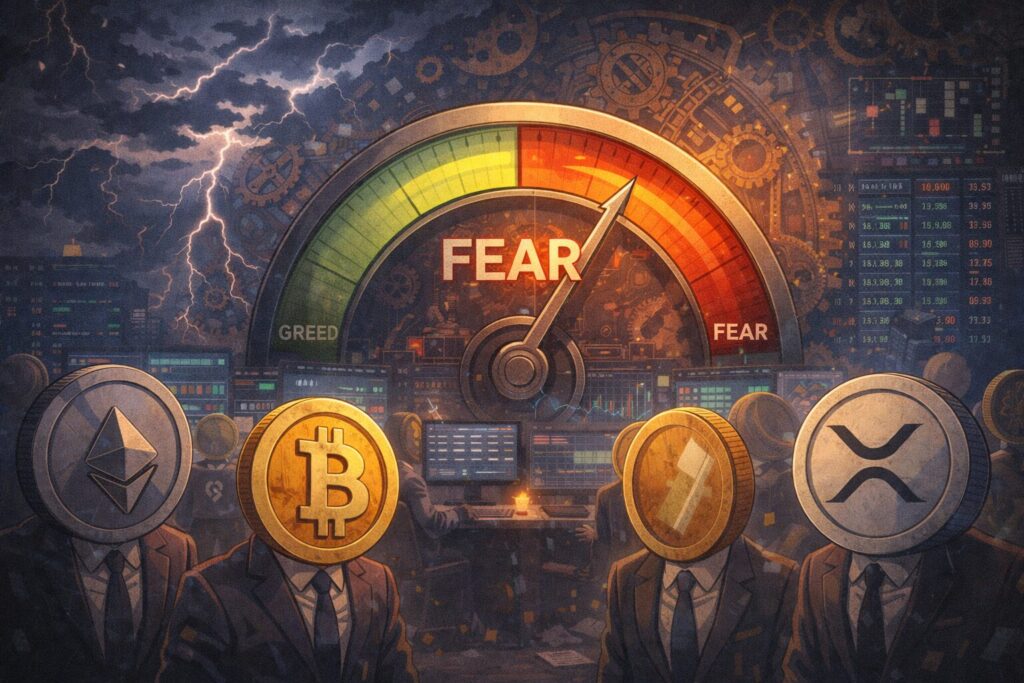

Crypto Feels Bad Right Now. That’s the Signal.
Let’s not dance around it.
Crypto doesn’t feel exciting.
It doesn’t feel safe.
It doesn’t even feel confusing.
It feels heavy.
And that matters more than price.
Because historically, markets don’t turn when people feel hopeful.
They turn when people feel tired of being afraid.
That’s where we’re drifting right now.
The Market Isn’t Neutral — It’s Nervous
If you’ve been watching sentiment tools lately, you’ve probably noticed something:
Fear & Greed indexes slipping back into fear Social sentiment around major coins getting negative again Traders quieter, less confident, less loud
This isn’t balance.
This is skepticism with a pulse.
Think of it like a crowded room where nobody’s talking anymore.
Not calm.
Not chaos.
Just tension.
That’s a phase markets move through, not stay in.
Why Fear Shows Up Before Momentum
Here’s the part people get backwards.
Fear doesn’t arrive after a breakdown.
It shows up before resolution.
Because fear isn’t about price — it’s about uncertainty with memory.
People remember:
the last dump the last fake rally the last time “this felt different” and wasn’t
So instead of excitement, you get hesitation.
Instead of hype, you get silence.
That silence?
That’s pressure building.
Like a spring being compressed slowly, not slammed.
This Isn’t the Same as “Sideways Boredom”
Sideways boredom feels lazy.
This doesn’t.
This feels like:
every move is questioned every rally is doubted every dip is feared but not chased
That’s not apathy.
That’s guarded attention.
Historically, some of the strongest market shifts start here — not because people are bullish, but because they’ve run out of reasons to panic.
Fear thins before it disappears.
That thinning matters.
Why Social Sentiment Matters More Than Headlines
Headlines are loud.
Sentiment is honest.
Right now, social data shows:
more pessimism than optimism more doubt than conviction more “I’m waiting” than “I’m buying”
That doesn’t predict price.
But it frames behavior.
When most people expect disappointment, markets don’t need much to surprise them.
That’s not a promise.
That’s a pattern.
The Trap Most People Fall Into Here
This is where people sabotage themselves.
They think:
“If fear is high, I should wait until it clears.”
But fear doesn’t clear cleanly.
It fades in layers.
By the time sentiment feels “safe,” price has usually moved.
By the time confidence returns, positioning is crowded again.
Fear is uncomfortable.
Clarity is expensive.
That’s the trade-off.
How People Read This Phase Without Overreacting
This is where context beats conviction.
People who survive these phases don’t predict.
They observe.
They use tools like:
sentiment gauges (to see if fear is expanding or thinning) positioning data (to see if traders are leaning too hard one way) market overviews (to spot rotation instead of chasing noise)
Not to time the bottom.
Not to call a rally.
Just to avoid letting fear drive every decision.
Think seatbelt, not steering wheel.
One Thing Worth Remembering
Markets don’t reward bravery.
They reward patience with posture.
Fear doesn’t mean “get out.”
It means “pay attention.”
And right now, fear is speaking again.
Quietly.
Final Thought
You don’t need to know what happens next.
You need to recognize where you are.
This isn’t euphoria.
It isn’t collapse.
It’s a market remembering pain — and deciding what to do with it.
If you can sit inside that without flinching, you’re already ahead of most people.